Stories
Family kitchens, in their own words
First-person testimony, family memory, and oral history. Demonstration records are marked. They are not authentic historical sources.

Stories
A handwritten card for chicken of the woods (suggested)
Yes i walked a forest in russia with some friends who were avid foragers
Recorded by Joseph Korson

Stories
A preserved family document
The ATELIER RESTAURANT ВОСТОЧНЫЙ БАЗАР ШЕФ-ПОВАР ПЕРВЫХ ЛИЦ БЛИЖНЕГО ВОСТОКА ДЖОЗЕФ КОРСОН С ЕДИНСТВЕННЫМ УЖИНОМ В РОССИИ I created a menu you that celebrated the flavors of the middle east. I took well known dishes and recreated the experience as gourmet menu. From taking Mallawach a traditional yemin staple and transforming it into a an elegant starter to my interpretation of the traditional Mezze Plate. I also like to draw my dishes to imagine how is like to plate my dishes. This menu took dishes from Morocco, Lebanon, Yemin, Iraq and Israel
Recorded by Joseph Korson

Stories
A handwritten card for brunch plate with fried eggs and fresh salad
I created this picture for a restaurant i consulted on This was on Bethlehem Rd in Jerusalem This breakfast was traditional eating in the kibbutz movement but soon became a staple offering accross israel
Recorded by Joseph Korson
Oral history
I grew up in Torrington Connecticut in a country house in the hills. one
I grew up in Torrington Connecticut in a country house in the hills. one of my fondest memory was going to the general store. The place was like stepping back in time. It even had a penny arcade with old mechanical arcade style games. The candy in this store was the mass produced fare this was old style sweets. My favorite were the watermelon sticks that as you sucked on them the center was a harder candy techture and flavor and of course the new england salt water tafee in all thier chewy glorious flavors.
Recorded by Joseph Korson

Family recipe
A handwritten card for Lamb with prunes
Lamb (Zanab) (1 for 10 people) Ask butcher to cut shoulder into smallish cubes Chop 4 big onions, pinch of parsley, 2 tablespoons turmeric - salt & pepper 4 " powdered cinnamon ½ cup oil (veg) Mix all tog - Place in pot & cook until tender - add 3 or 4 lemons (taste) when nearly done (± 1½ hrs) take some juice from the pot & soak 2 pkts of stewed prunes in the sauce place a little cinnamon & sugar to taste & boil it up for 5 mins Put cooked meat in a dish & pour over sauce with the prunes on top - serve. Chicken (Zanab)
Recorded by Joseph Korson

Stories
Esther’s New York Cheesecake
my mother esthers favorite new york cheesecake recipe she makes it for special occasions. she has been making it since we were kids in connecticut to now in israel but the recipe is new york city born
Recorded by Joseph Korson

Stories
Wild sage scented duck breast — Oriental Bazaar, Volgograd 2022
Chef Joseph Korson made this dish for a ticketed Oriental Bazaar experience in Volgograd in 2022. The menu was created from the culinary heritage and ingredients found in the Middle East, using locally available ingredients from the restaurant's farm. The plate was sous vide and pan-seared wild sage scented duck breast, served on a pomegranate red wine reduction with saffron fondant potatoes, cardomen and cinnamon spice pumpkin, pea puree and braised radishes. A colored-pencil drawing records the composed plate.
Recorded by Joseph Korson

Stories
Mallawach for the high table
This is a dish I created for the high table from a yemin street food called mallawach. I had Mallawach as a street food growing up in Jerusalem. When I worked with the Prime Minister I created menus that express the different culinary cultures of the land of Israel. I’d take a traditional dish and deconstruct it and using chefs techniques transform it for high table.
Recorded by Joseph Korson
Demonstration record
Oral history
Friday yaprak, in the languages she actually spoke
Бабушка готовила yaprak каждую пятницу. Горсть риса, виноградный лист, немного мяса — «пока не почувствует себя правильно». Потом, уже в Хайфе, она сказала לי בקול שקט: זה הריח כמו הבית. The name stayed yaprak. She would not say dolma. She would not say stuffed grape leaves.
Recorded by Archive demonstration
Demonstration record
Family recipe
Seeded bread on stone
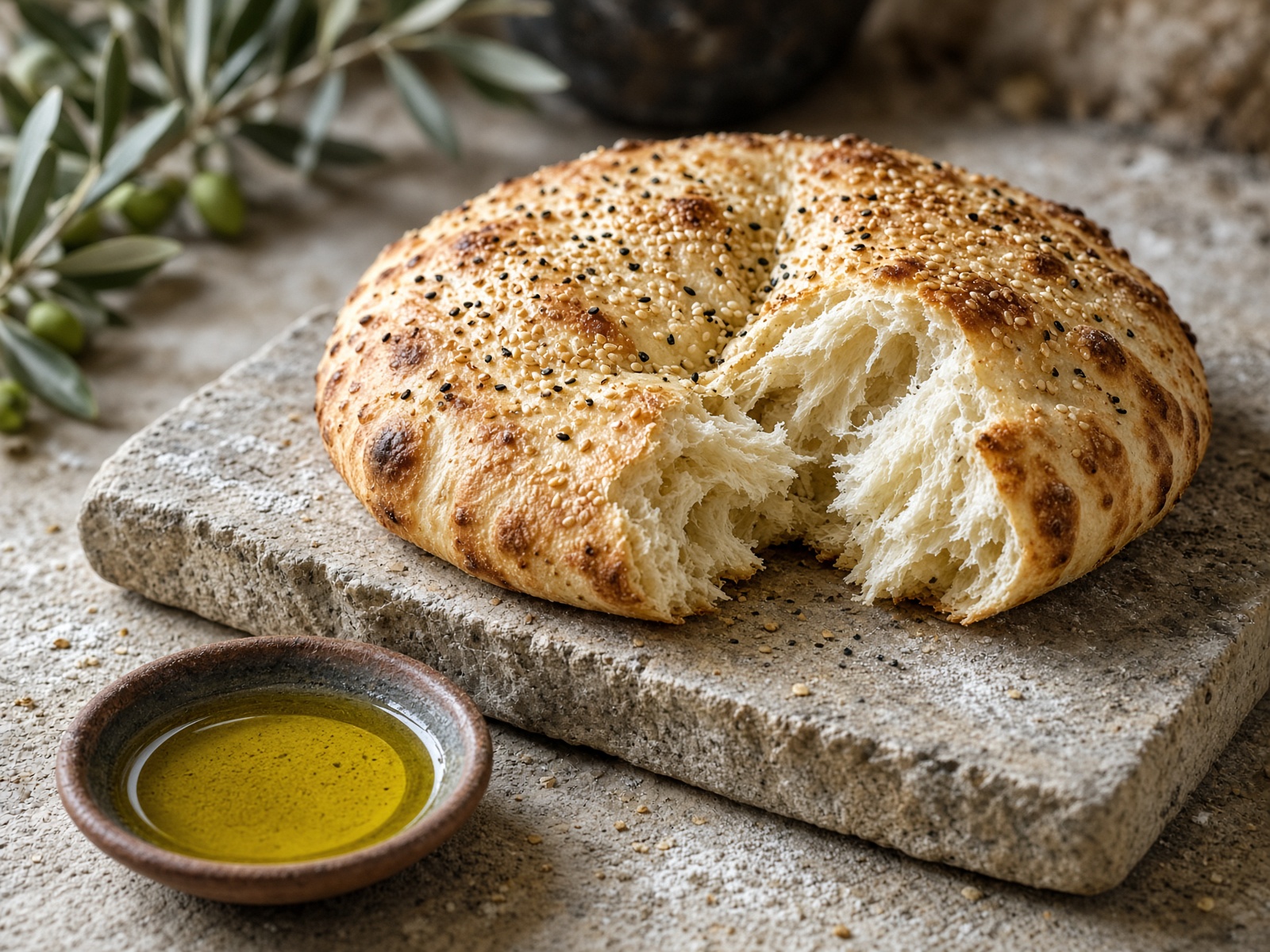
The Haddad kitchen baked a round bread with sesame and nigella when there was time, and bought it when there was not. Miriam found a card in Farida’s handwriting with no title, only: flour, a little oil, seeds, hot stone. In Tulkarem Layla’s bread is thinner. In Yerevan the tannur makes it thinner still. KinDish keeps these as related household breads rather than as one bread with a flag on it.
Recorded by Miriam Haddad

Demonstration record
Oral history
The pot that must not be stirred
Adaeze Okonkwo’s jollof is a celebration pot. Birthdays, returns from far away, the Sunday that is not ordinary. The base is blended tomato, pepper, onion. Palm oil. Thyme. Bay. The rice goes in and then — this is the law — you do not stir. If you stir, you have porridge, she says, and porridge is for another day. The crust at the bottom is not a mistake. It is the part the children fight over. She has eaten jollof in other houses, other cities, other countries. She does not rank them. She only knows her pot.
Recorded by Archive demonstration
Demonstration record
Family recipe
Friday fish in Fez
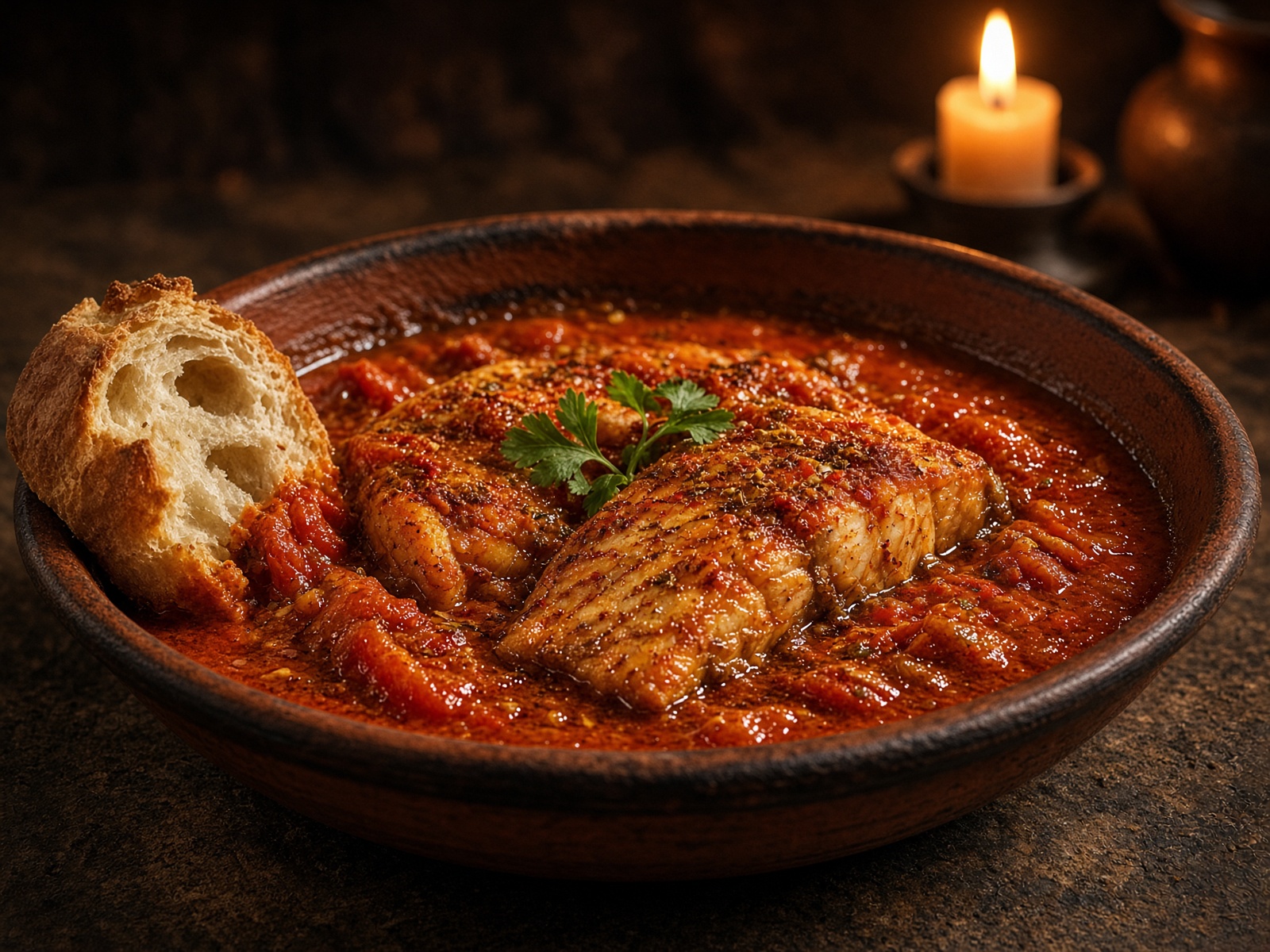
Chraime is Friday. That is the first sentence. Solange’s sauce is peppers, tomato, cumin, paprika, garlic, a little water — not a soup, a bed. The fish goes in late so it does not break. In Fez the fish came from the market before Shabbat. In Marseille it came from the Vieux-Port and she complained every week that the water tasted different, then cooked it the same way. She tears bread, not rice, to eat it. The sauce is the point. The fish is the excuse to have sauce on Friday.
Recorded by Archive demonstration
Demonstration record
Stories
Pumpkin for the new year
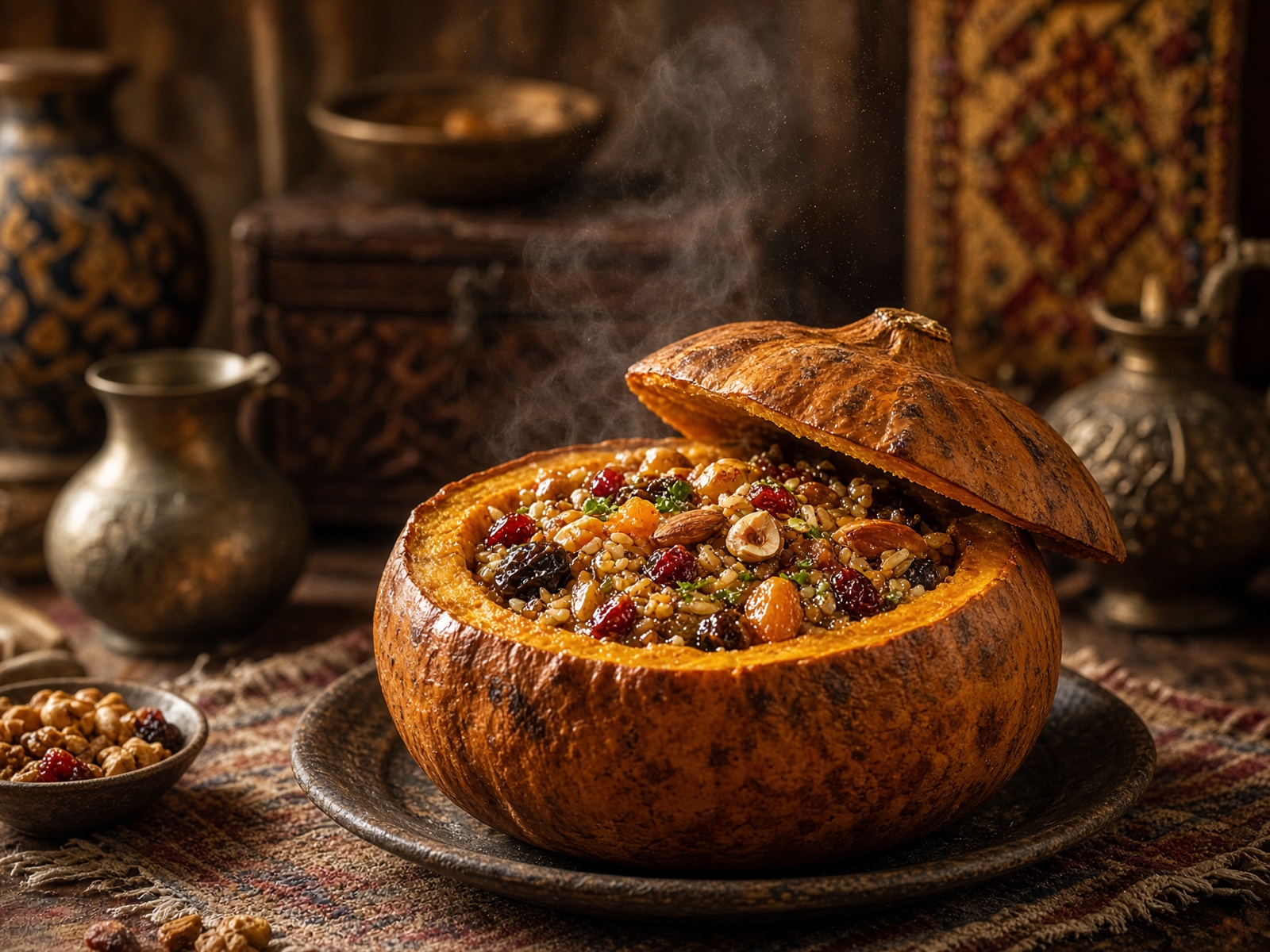
Anahit Petrosian’s ghapama is a pumpkin that has become a bowl. Rice, dried fruit, honey, butter, a little cinnamon. In Yerevan it comes to the new-year table whole, then is opened so the steam stands up like a blessing nobody wants to name too loudly. She bakes lavash the day before, slapped to the tannur wall, thin enough to fold around herbs. The bread is for every day. The pumpkin is for the day the year turns. A Georgian guest once said the stuffing was a cousin of something at home. Anahit said: then sit, and we will see how close.
Recorded by Archive demonstration
Demonstration record
Oral history
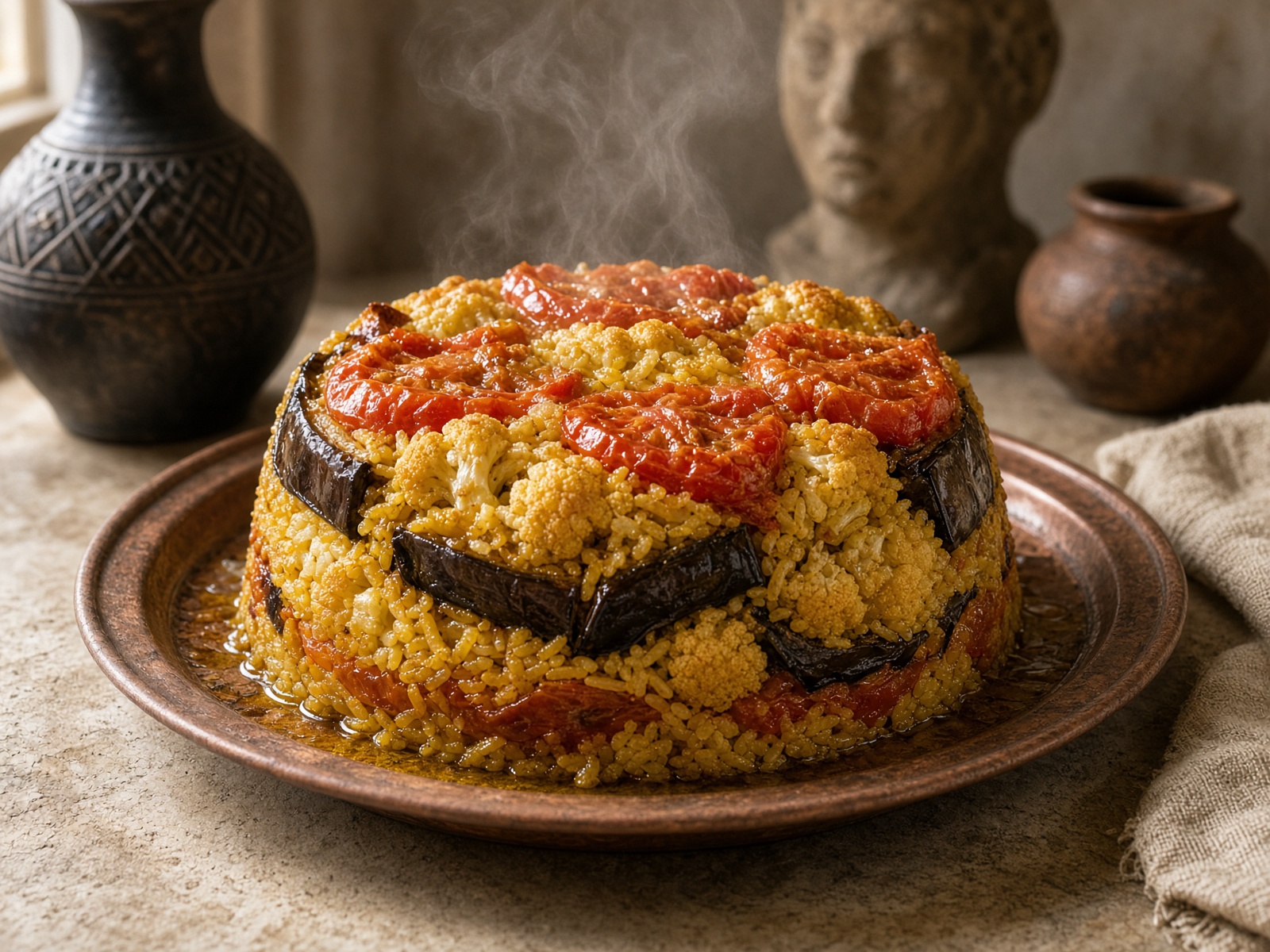
The upside-down pot in Tulkarem
Layla Al-Masri turns the pot in one motion. If it holds, the table cheers. If it slumps, the table eats it anyway and pretends it held. Maqluba is theater and dinner. In Tulkarem in Ramadan the eggplant is fried in the morning, the rice washed and left, the meat browned. At iftar the inversion is the first thing the children wait for — before the qatayef, before anyone speaks. She says her mother learned it from her mother, and that the neighbors made it too, Muslim and Christian houses on the same street, with small differences nobody thought to write down. I am writing them now, she said, because the street is not the same street.
Recorded by Archive demonstration
Demonstration record
Oral history
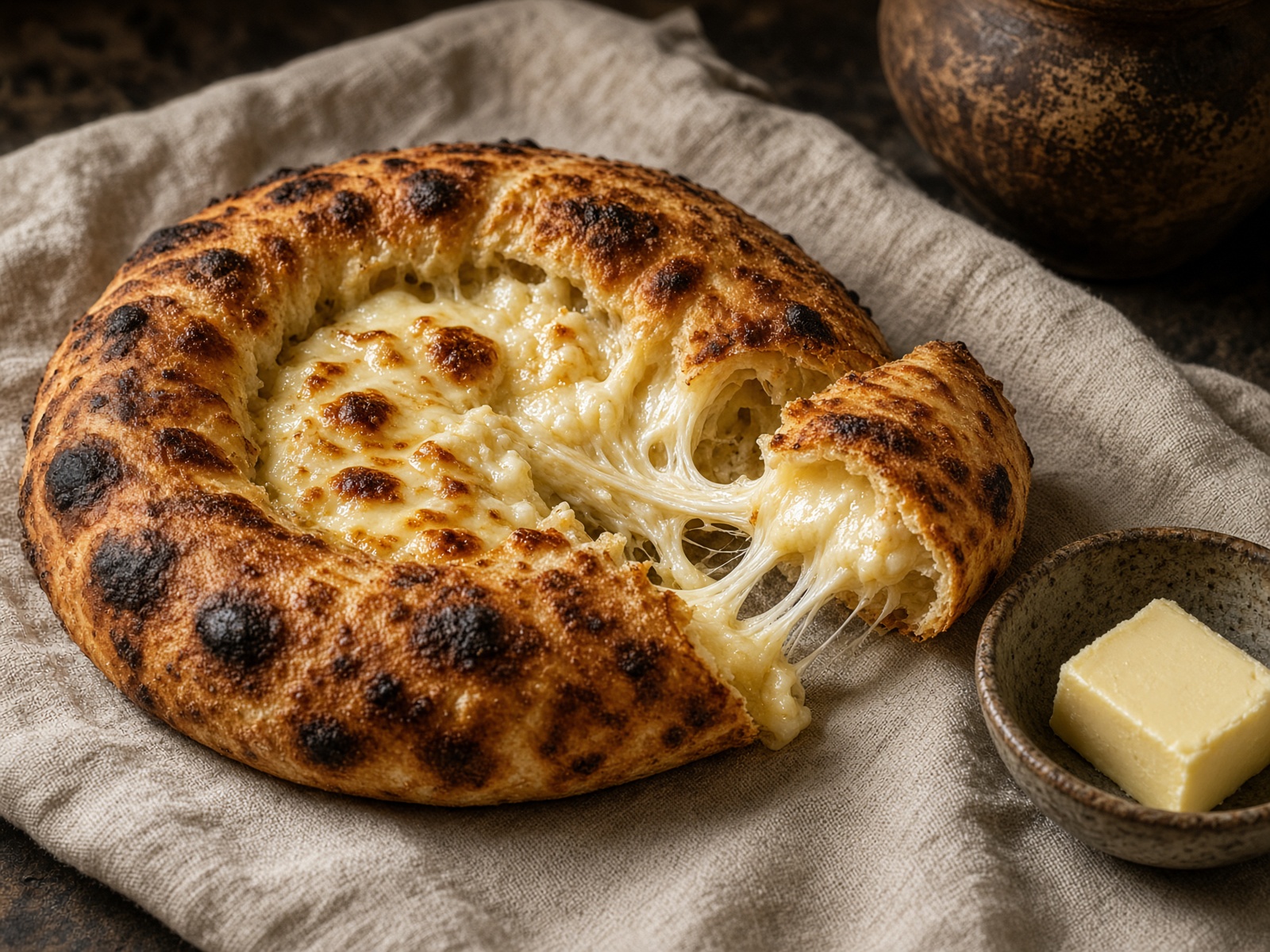
The sound of the cheese bread
Nino Tskitishvili judges a khachapuri by the sound it makes when you tear it. If the cheese whispers, it is ready. If it shouts, the oven was too proud. In Tbilisi her Imeretian round bread is for guests who did not warn her, which is to say for everyone. She folds sulguni into a dough she does not measure. A handful of flour until it feels right. Cook until done. At weddings the khachapuri sits beside satsivi. Bread first, she says, then the walnut. The table is not a performance. It is a sentence with many clauses.
Recorded by Archive demonstration
Demonstration record
Oral history
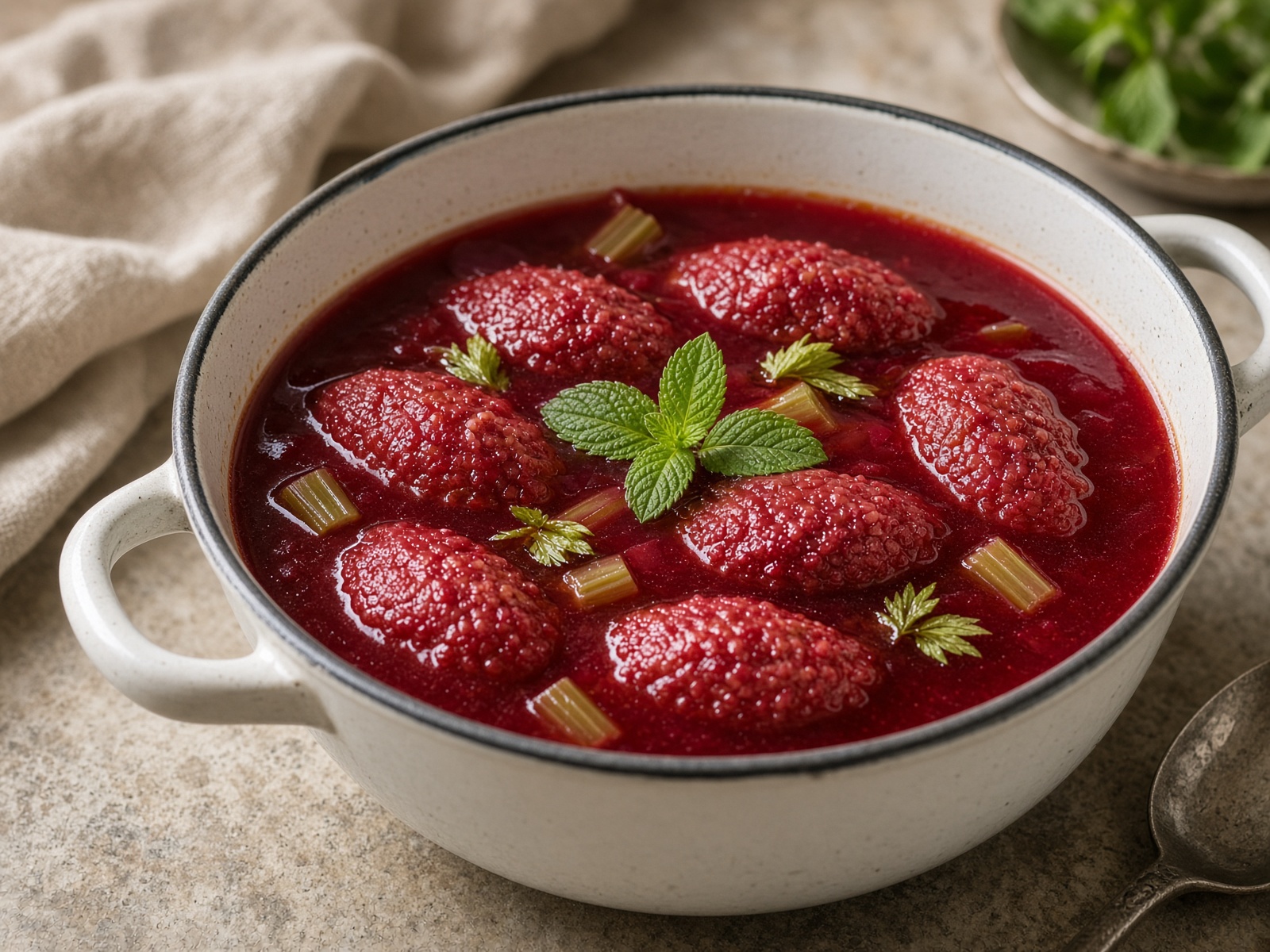
Beet soup in a new country
Esther Cohen’s kubbeh came out of the pot the color of a pomegranate split open. In Baghdad the beets were cheap in winter. In Tel Aviv she planted them in a tin behind the building because the market ones were pale. She had heard of the sour kubbeh of Aleppo — lemon, mint — and she respected it the way you respect a cousin. Our soup is red, she said. Theirs is yellow. The dumplings are the same idea: bulgur, a little meat, closed with a wet thumb. She would not say which city invented it. She said only: in our house it was Friday, and it was red.
Recorded by Archive demonstration
Demonstration record
Stories
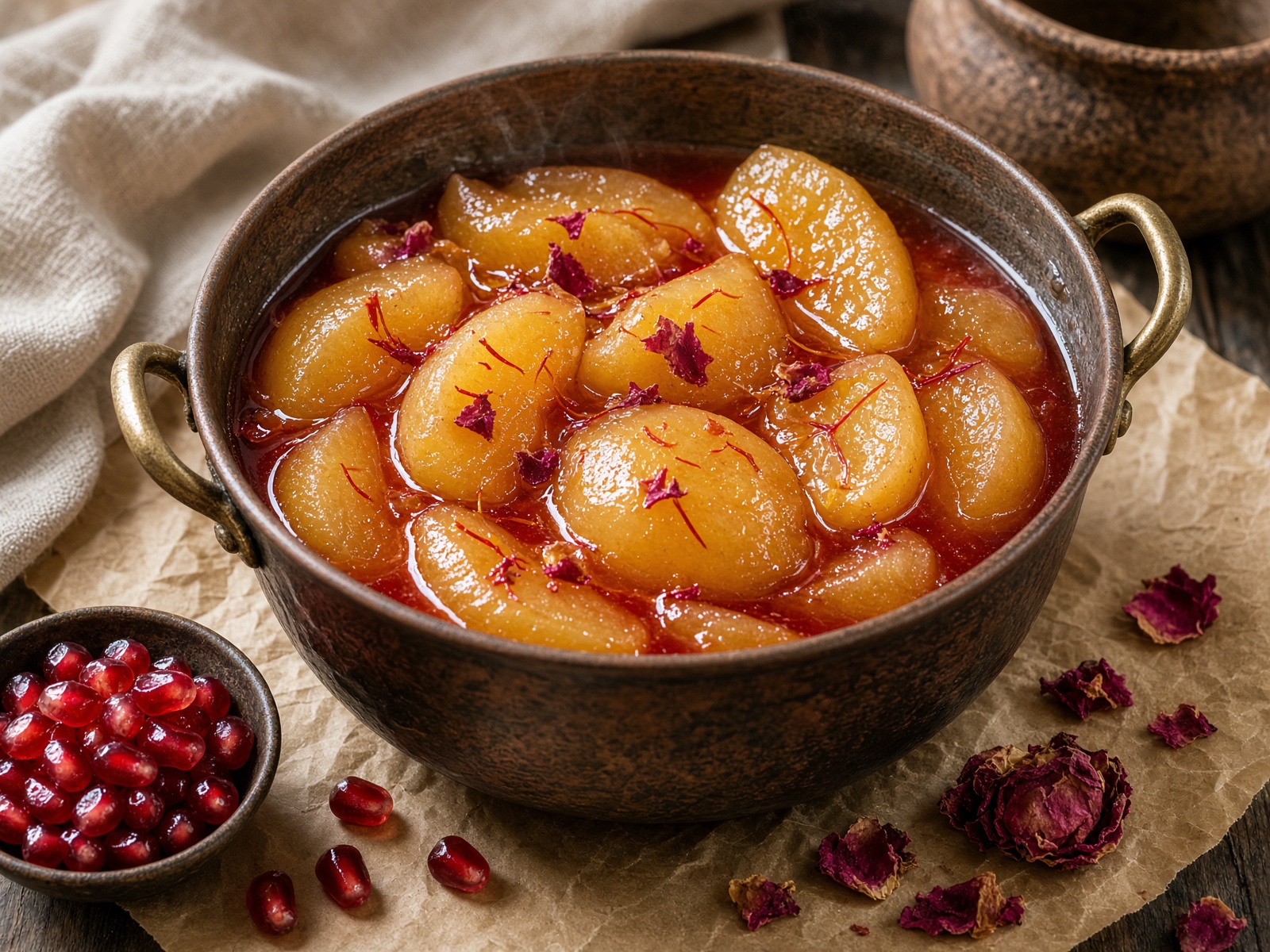
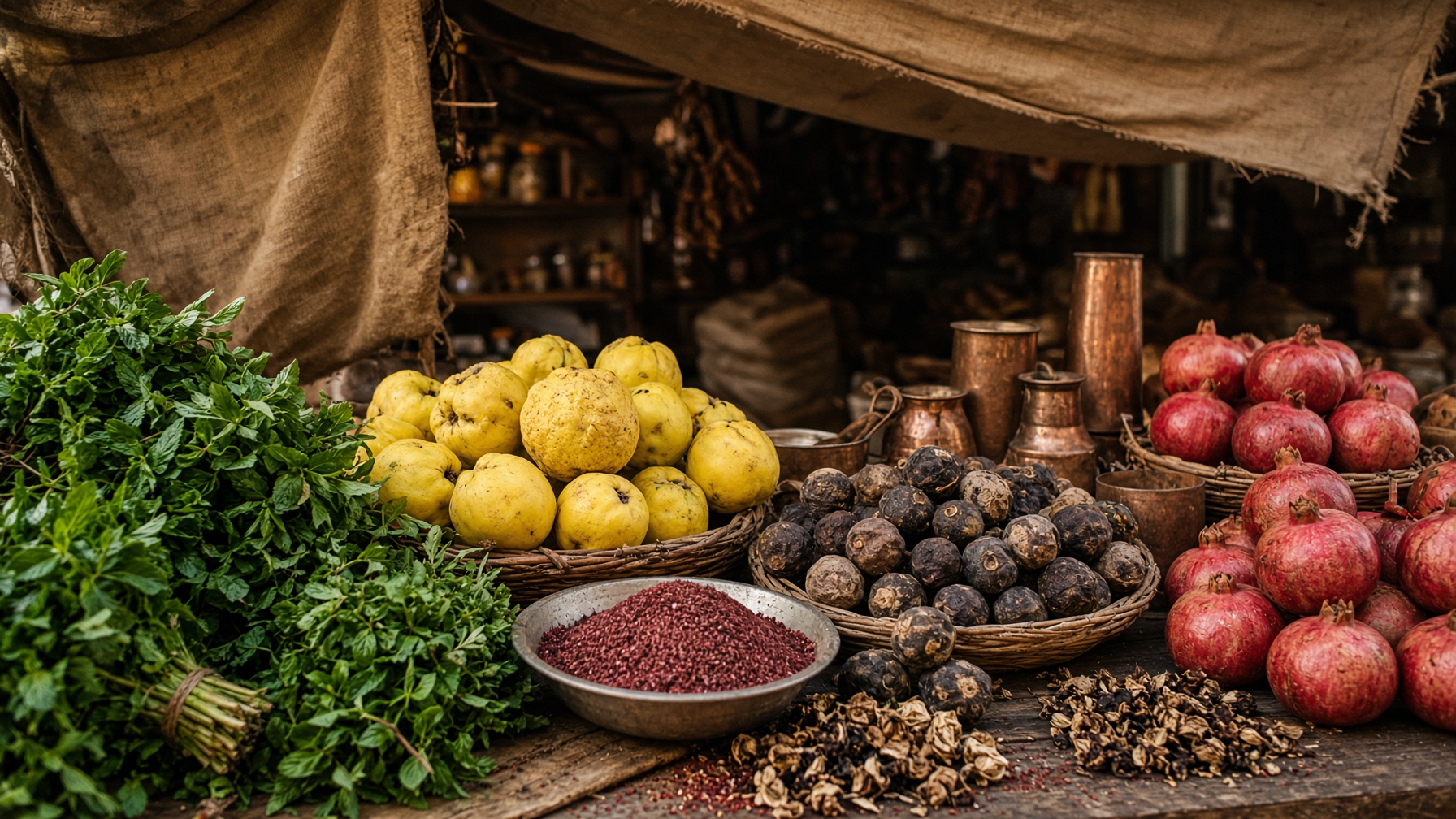
Quince from the eastern Mediterranean
Quince appears in this archive the way a relative appears at different tables: in a copper pot in a story from Isfahan, in a jam Farida mentioned and never wrote down, in the Armenian new-year stuffing when the pumpkin was small and the quinces were many. Nobody in these records claims quince. They stew it until it goes from wool to jewel. They add pomegranate, or saffron, or nothing but sugar and patience. This is not a complete recipe. It is a map of mentions. The fruit is older than any of the kitchens that cooked it here.
Recorded by KinDish archive
Demonstration record
Family recipe
The basin we could not take
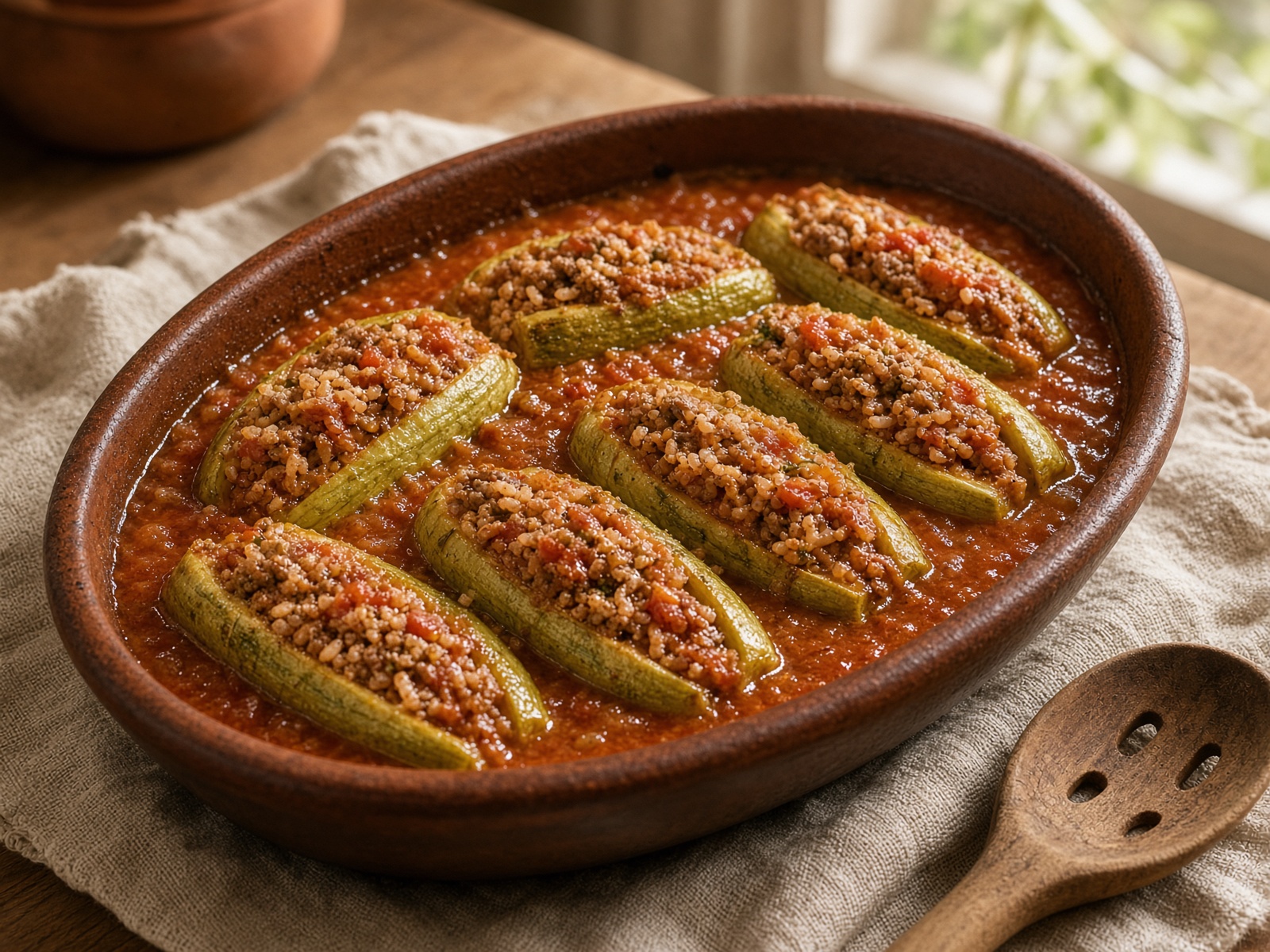
Farida stuffed zucchini the way her mother had, with rice, a little meat, and a sour tomato broth. In Aleppo the sourness was lemon. In Beirut a neighbor used tamarind, and Farida took that with her to Jerusalem. She always said the stone basin was the only thing she regretted leaving. Not the house. The basin. You cannot pound bulgur properly in a saucepan, she told me, and then she did it anyway for forty years. On the card she wrote only: kousa, rice, tamarind if there is. Enough water. Cook until the house smells like Thursday.
Recorded by Miriam Haddad
Demonstration record
Oral history
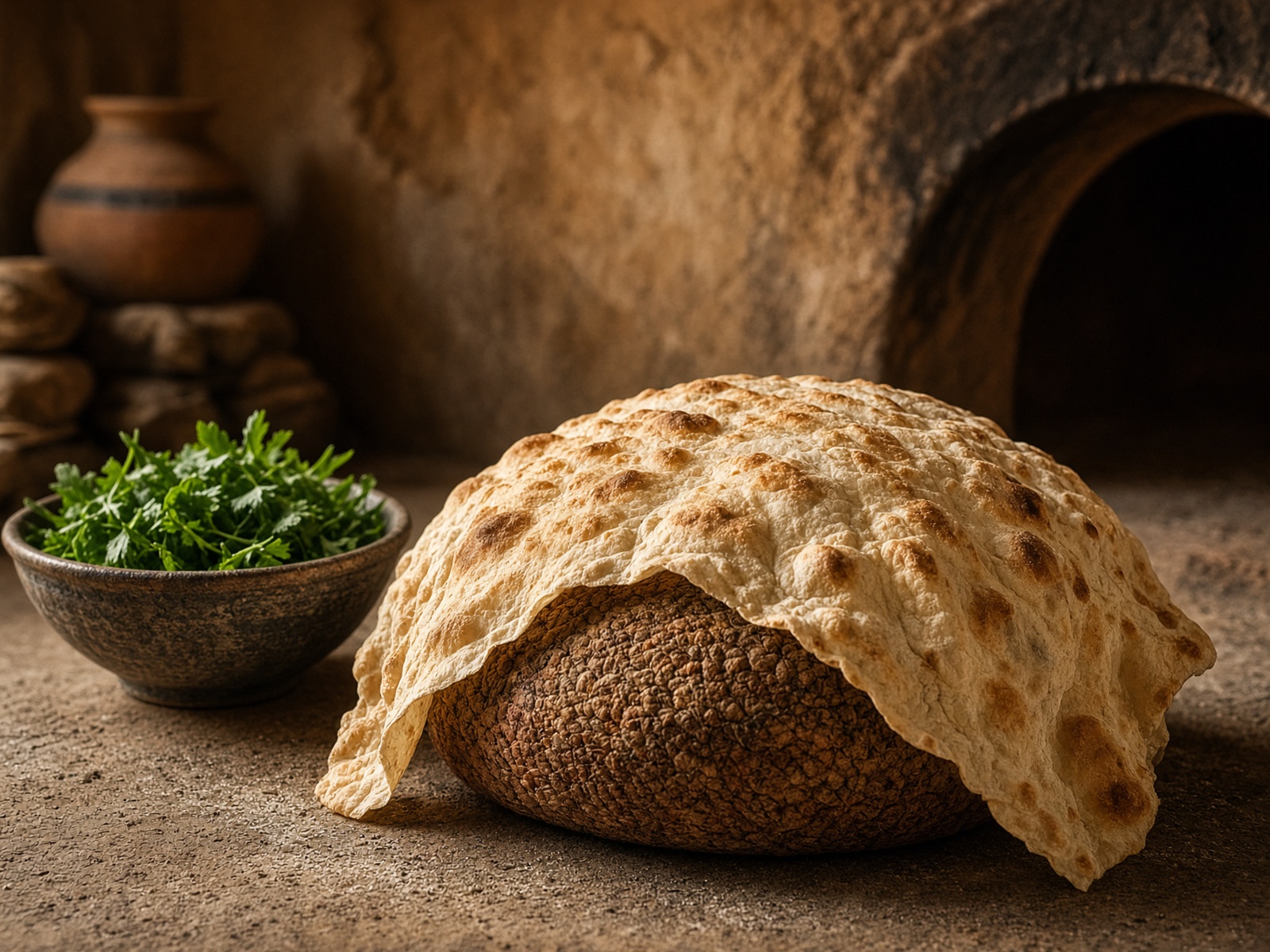
The thin bread of the tannur
Lavash is not a recipe so much as a temperature. Anahit knows the oven is ready when the wall is too hot for the back of the hand and not yet angry. The dough is flour, water, a little salt. A handful until it feels right. She drapes it over a cushion, then onto the wall. Seconds. If you wait for a timer you have a cracker. She has seen thin breads in other places with other names. She does not collect names. She collects the moment the bread comes off in one piece.
Recorded by Archive demonstration
Demonstration record
Oral history
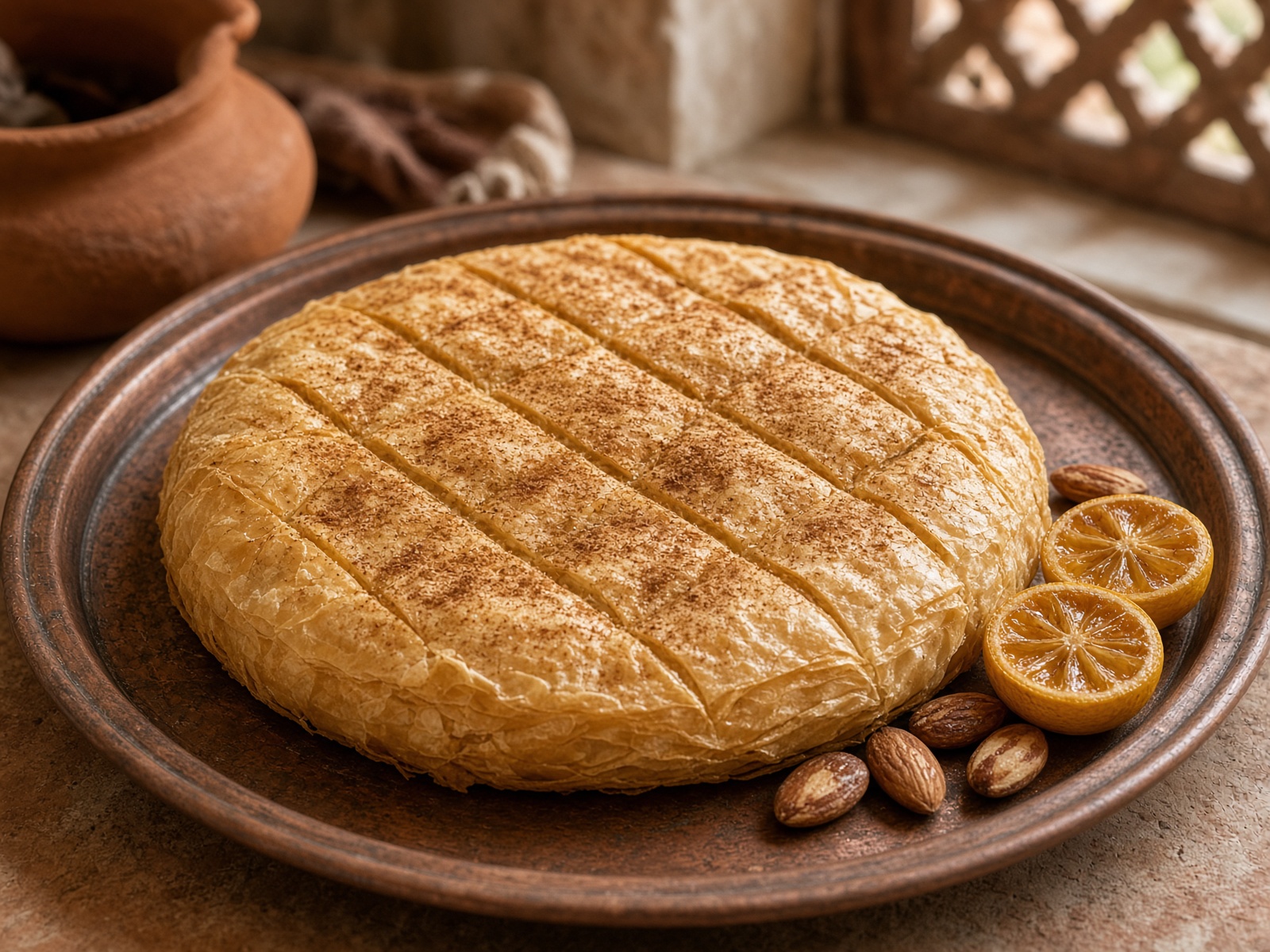
A pie for both kitchens
Solange Ben-Maimon will not say that pastilla is Jewish or that it is not. In Fez, she said, the same street sold warqa to everyone who could pay for it. What changed was the table it landed on, and sometimes the filling, and sometimes the sugar on top. In Marseille she still dusts the pie, still hides cinnamon in the savory, still argues with her sister about pigeon versus chicken. Preserved lemon is for other pots, she says — unless the filling is too polite, in which case a little rind. She wants the record to show two things at once: this is how we made it, and other people made it too.
Recorded by Archive demonstration
Demonstration record
Oral history
The crock in Kyoto
Haruko Watanabe keeps a pickle crock the way other people keep a calendar. Summer is cucumber and ginger. Autumn is turnip. Winter is heavier, quieter. She has not yet given KinDish a complete recipe — only the fact of the crock, and that her mother started it before the war. This archive has more to say about Levantine and Caucasian pickles than about Kyoto. That imbalance is recorded as a gap, not as a conclusion about the world.
Recorded by Archive demonstration
Demonstration record
Stories
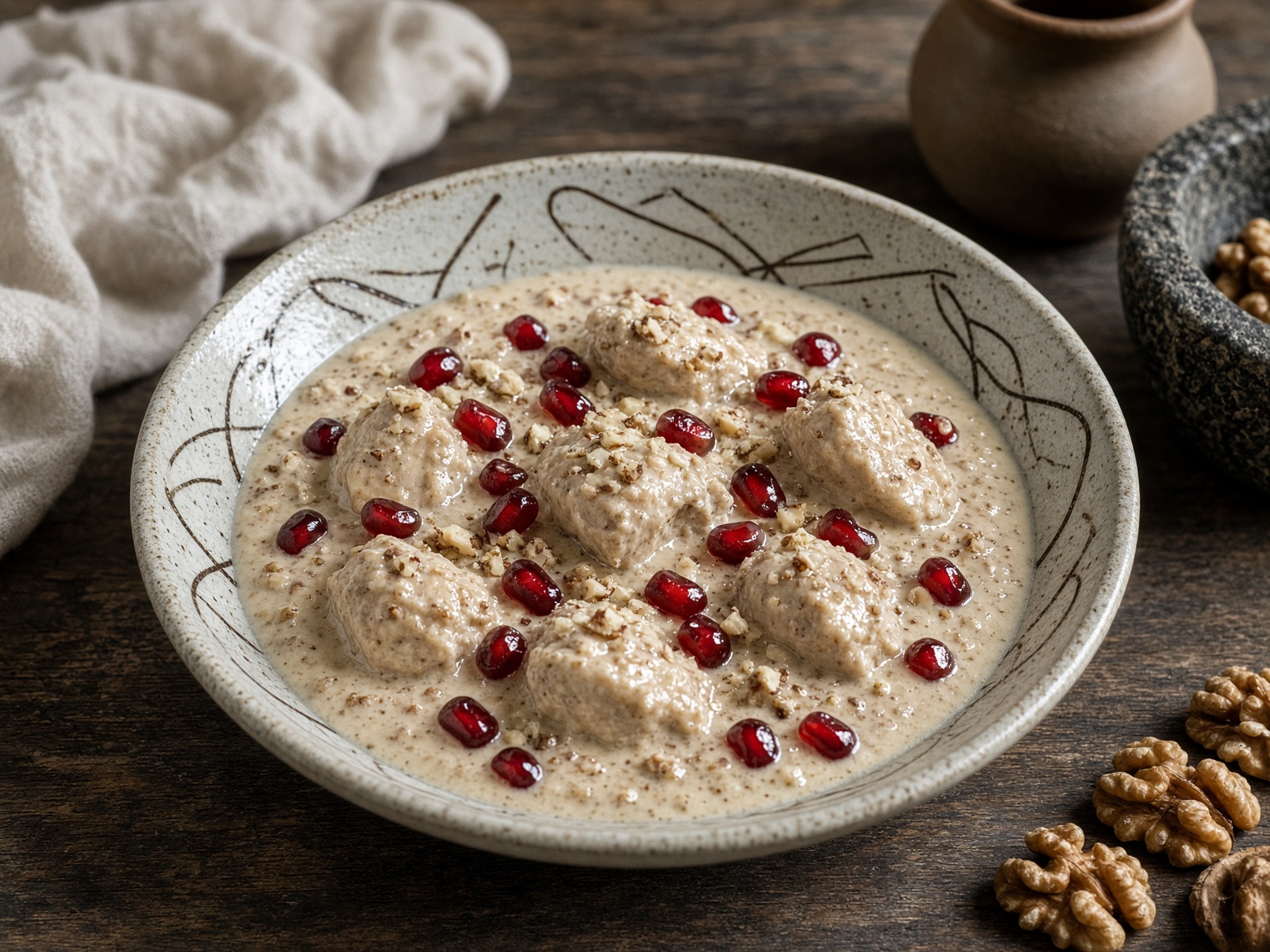
Walnut sauce for a wedding
Satsivi must cool. That is the whole argument of the dish. Nino grinds walnuts until they become a paste that can stand a spoon, then loosens it with the broth of the bird, garlic, marigold, a little cinnamon. Pomegranate seeds at the end, because the eye has to eat too. She learned it from her aunt, who learned it for a wedding in Kakheti. Whether the sauce is older than the wedding or the wedding older than the sauce is not a question this kitchen asks. A visiting cousin from Yerevan said the walnuts reminded her of a stuffing at home. Nino nodded. Mountains talk to each other, she said, even when people do not.
Recorded by Archive demonstration
Demonstration record
Oral history
Thursday night kubbeh
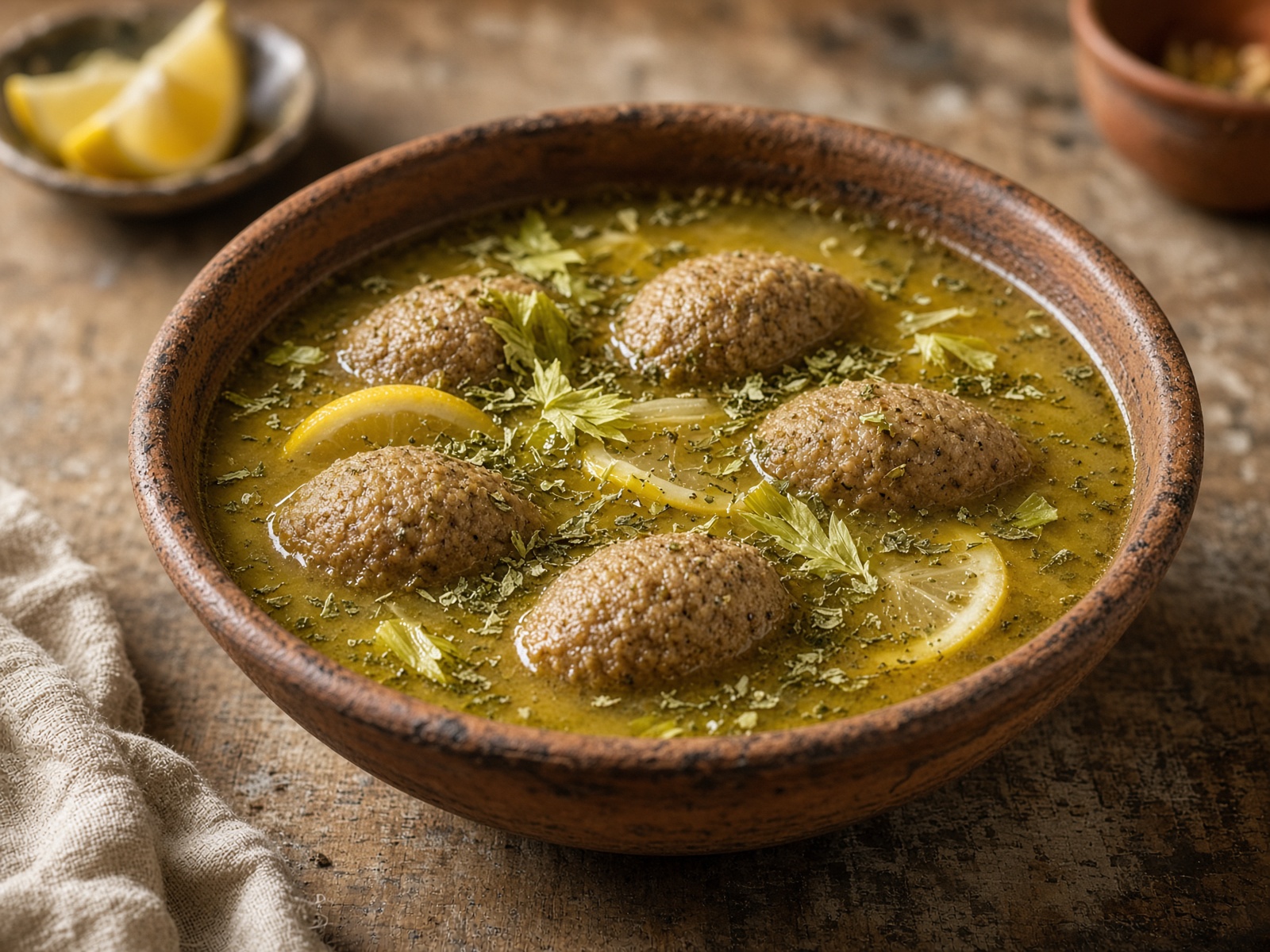
My grandmother Farida would start the kubbeh on Thursday night. In Aleppo, she said, you could hear the neighbors pounding the bulgur in stone basins before Shabbat. When the family left, the basin stayed. In Jerusalem she used a metal bowl and said the sound was wrong, but the sourness she refused to change. The broth was lemon, dried mint, celery leaves, and — if she could find it — a piece of tamarind. She called the dumplings kubbeh, never dumplings, and she would tap each one twice on the rim of the pot before it went in, a habit nobody could explain. I asked her once if this was an Aleppo dish or a Jewish dish. She looked at me as if I had asked whether bread was a city. It is what we cooked, she said. Other people cooked it too.
Recorded by Miriam Haddad